By deviating from traditional contract-based plans with its new "Un-carrier" plans, T-Mobile took a risk. When a company deviates from the norm in such a way, it opens itself to criticism as much as praise, and T-Mobile has received a fair amount of both so far.
On the one hand, despite the carrier's boastful advertising that bills its Un-carrier plans as revolutionary, some have complained that T-Mobile hasn't gone far enough with its plans; that its pricing is still more or less in line with its larger competitors, Sprint, AT&T and Verizon. On the other hand, consumers have responded to the relative freedom offered by T-Mobile's Un-carrier plans to the point that Verizon CEO Lowell McAdam recently said he would consider also eliminating contracts.
However, T-Mobile yesterday came under fire from Washington state Attorney General Bob Ferguson, who claims the carrier isn't being forthright with consumers about how its plans work — particularly in terms of having the freedom to leave T-Mobile.
The main aspect of the Un-carrier plans that Ferguson has taken issue with is the fact that consumers have to pay the full price of their smartphone if they decide to leave T-Mobile. Indeed, in lieu of a contract, customers instead slowly pay off the price of their device as part of their monthly phone bill. If customers want to leave T-Mobile for any reason, they have to pay off the remainder of their smartphone before they can do so.
Ferguson is calling this a "surprise balloon payment" for consumers, pointing out that it can be higher than a regular cancellation fee in some cases. Most importantly, he believes that T-Mobile hasn't been clear in its advertising that consumers would have to make this potentially large payment.
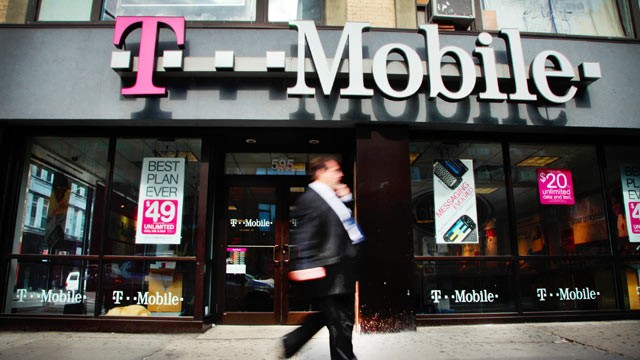
Image via ABC
T-Mobile has agreed to cease advertising that claims Un-carrier plans have no restrictions, while making it clearer to customers that they will have to pay the full price of their device if they leave the service early. Meanwhile, customers who purchased a T-Mobile plan and phone between March 26 and April 25 can get a full refund for the device and cancel their service plans without penalty.
Despite its cooperation, T-Mobile made it clear that it doesn't agree with Ferguson's charges.
"While we believe our advertising was truthful and appropriate, we voluntarily agreed to this arrangement with the Washington AG in this spirit," said a T-Mobile representative. "We also think it important to note that this was a voluntary agreement entered into between T-Mobile and the Washington State AG to settle this matter outside of court, and that the settlement was not a result of any court action."
Edited by
Rachel Ramsey