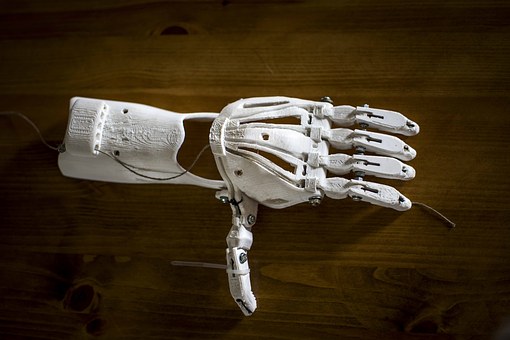
A 3D printer can obviously be used to create a three dimensional product. The opportunities are essentially unlimited for 3D printing Houston. More and more sectors are starting to use this process. One of the most promising industries is the medical sector. It is becoming quite common to use medical 3D printing Austin nowadays. This provides the doctors with new possibilities, but also the patients. In the last few years it has become possible to print more and more body parts. In 2019 three new body parts were 3D printed, these are introduced below.
Pancreas
This 3D printed pancreas is rather special, mainly because it was created with the patient’s own cells. Besides that, it also has blood vessels. This combined limits the risk of the patient rejecting the new organ. Unfortunately the printed pancreas could not completely replace the organ, but it did restore insulin production. The 3D printed cells were supported by bio-inks and pancreatic islets from animals. One syringe of the 3D printer creates blood vessels, while the other one is used to display the mixture. This was affirmed by dr. WIszola, a scientist from the Foundation for Research and Science Development in Poland.
Lung
In 2019 researchers were also able to 3D print a lung. It is not made with human cells, but still offers new opportunities for organ transplants. The 3D printed organ was created by Jordan Millar, who is an assistant professor of bioengineering at Rice’s Brown School of Engineering. His team is the proof of concept, which is very interesting for the medical industry. This is the case because the 3D printed lung is fully functional even though it is not made with human cells. The bionic organ pumps air just like real lungs, which it does through contracting and expanding.
Heart
A 3D printed heart with human tissue has been created for the first time as well in 2019. Using human cells to 3D print a vascularized heart had not been done before, so it is very impressive and special. The heart has blood vessels, chambers, and cells. Besides human cells, patient-specific biological materials were used as well during the process. The research was led by professor Tal Dvir from Tel Aviv University’s School of Molecular Cell Biology and Biotechnology and Sagol center for Regenerative Biotechnology. His work is very promising for the future of organ replacements.