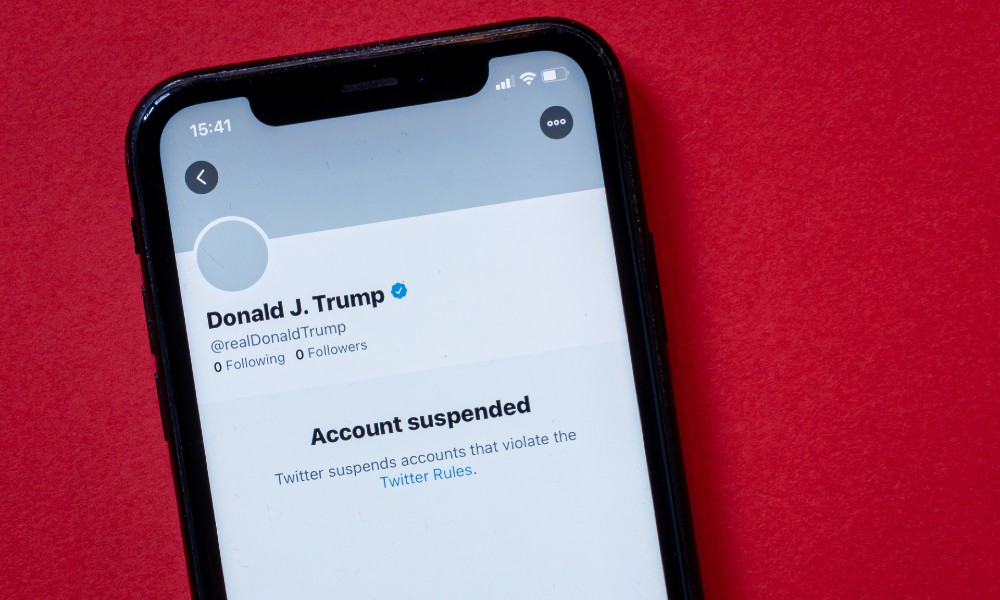
The recent capital riot caused the social media industry to ban President Trump, due to the allegations that Trump personally promoted and encouraged his supporters to incite violence on government officials. Initial responses prompted some companies to temporarily ban his accounts, but massive public outcry from users, and even employees, forced the majority of these social media giants to take even bolder action.
Jack Dorsey, the CEO of Twitter, recently commented on his company’s decision to take President Trump off the platform. Although Dorsey believes his company made the correct decision, he points out that Trump’s banishment could have serious consequences down the road. Last night, Dorsey tweeted a thread that elaborated on his position, stating:
“...That said, having to ban an account has real and significant ramifications. While there are clear and obvious exceptions, I feel a ban is a failure of ours ultimately to promote healthy conversation. And a time for us to reflect on our operations and the environment around us.”-Jack Dorsey
He also went on to explain that influential users, like President Trump, are promoting real world action in the digital space, therefore making it a necessity for public safety to cut off his platform for promoting dangerous ideas. But Dorsey also made it clear that these decisions cause further division between political parties, and prevent the country from coming together. Dorsey also made a surprising comment about social media as a whole, alluding to the fact that the industry has become too powerful, tweeting:
“Having to take these actions fragment the public conversation. They divide us. They limit the potential for clarification, redemption, and learning. And sets a precedent I feel is dangerous: the power an individual or corporation has over a part of the global public conversation.”
President Trump has expressed this opinion as well, and has made requests over the past few months for Congress to revoke section 230, which essentially allows internet companies to block free speech. Many critics argue that because the internet plays such a significant role in our society now, the law should be repealed or at the very least adjusted to reflect this. Section 230 was introduced in 1996 as a part of the Communications Decency Act, well before the internet became what it is today.
President Trump’s term may be coming to an end on January 20th, but the events of this past week could have lasting effects on years to come.
Edited by
Maurice Nagle